Overview
Accurate measurements are the cornerstone of quality manufacturing. Plain gauges, also known as slip gauges or flat gauges, are vital tools used to measure thickness, flatness, and spacing in various mechanical and industrial components. They ensure that every part aligns with specifications, reducing errors and maintaining production consistency. From automotive to general manufacturing, plain gauges are crucial for producing precise and reliable products.
What Are Plain Gauges?
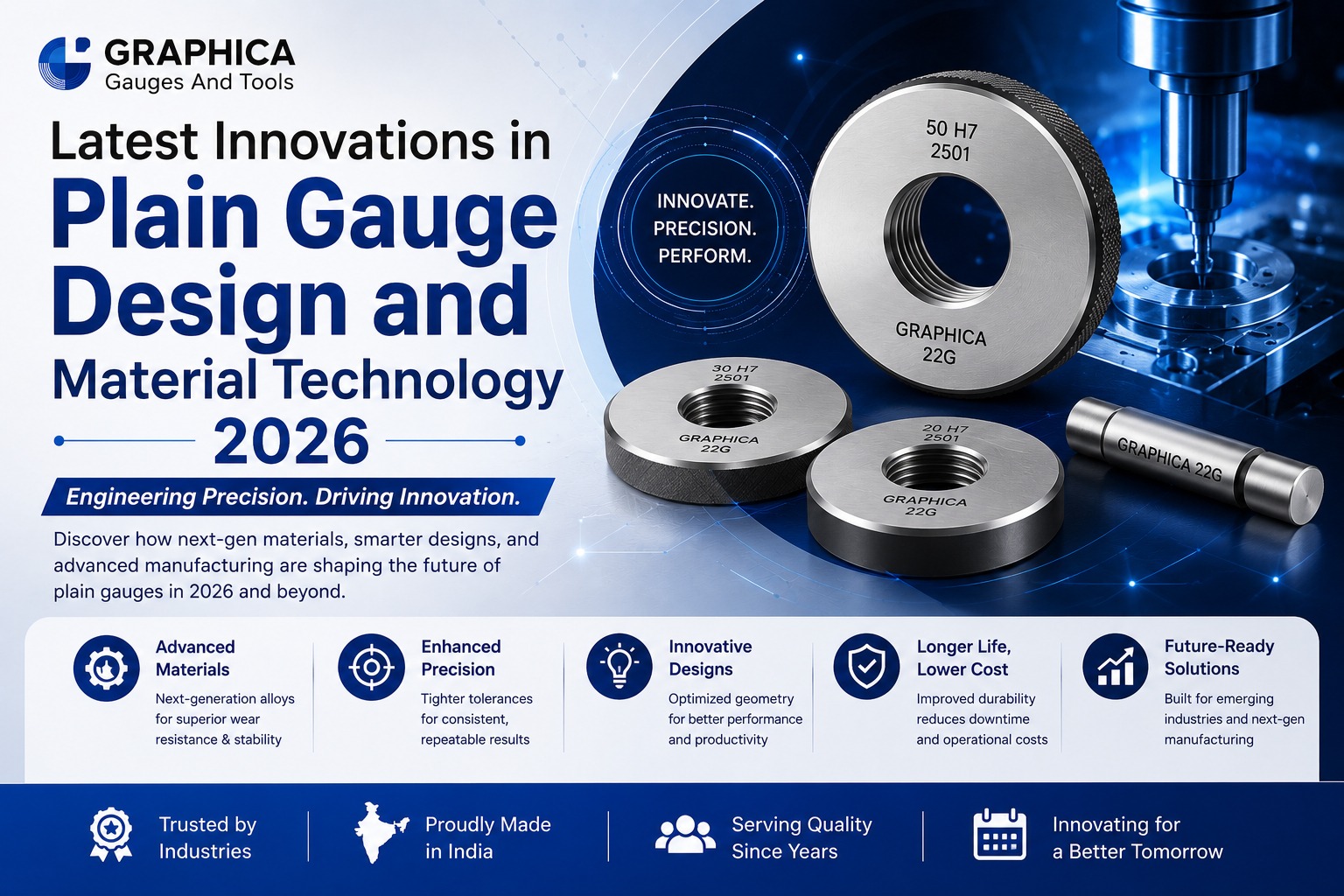
Plain gauges are precision instruments used to check flatness, thickness, and dimensional accuracy of components. They are often used in quality control processes to ensure that parts meet the required tolerances. Types of plain gauges include slip gauges, gauge blocks, and flat measurement tools, all designed to provide high accuracy in measurements. Plain gauges help manufacturers avoid defects, improve assembly accuracy, and maintain compliance with industrial standards. They are widely used in industries that demand precision, including aerospace, automotive, mechanical workshops, and heavy engineering units.
Why Choose High-Quality Plain Gauges
Selecting superior plain gauges is essential for efficient and accurate manufacturing. Reasons include:
- Precision: High-quality plain gauges deliver exact measurements, ensuring components meet tight tolerances.
- Durability: Built with premium materials, they withstand frequent industrial use without deformation.
- Consistency: Maintains uniform performance over extended periods, critical for mass production.
- Standard Compliance: Gauges manufactured to ISO, DIN, and ANSI standards ensure quality and reliability.
- Cost Efficiency: Accurate gauges reduce errors, rework, and material wastage, saving time and money.
Benefits and Advantages of Using Plain Gauges
- Superior Product Quality: Guarantees components meet exact specifications for smooth assembly.
- Error Reduction: Helps minimize mistakes and defective production.
- Efficiency: Speeds up inspection processes, saving valuable production time.
- Material Savings: Reduces scrap due to precise measurements.
- Durability: Long-lasting gauges reduce the need for frequent replacements.
- Compliance Assurance: Supports adherence to international quality standards, ensuring uniformity.
Incorporating plain gauges in production ensures precise control over component dimensions, contributing to overall product excellence and operational efficiency.
Conclusion
Plain gauges are essential tools for any manufacturer prioritizing precision and quality. Using high-quality gauges ensures accurate measurements, reduces waste, improves efficiency, and maintains compliance with international standards. Investing in durable and precise plain gauges enables manufacturers to consistently produce reliable, high-quality products. Precision, accuracy, and efficiency—plain gauges are the key to achieving all three in modern manufacturing.